The journal is open. The shop opens soon·What’s coming

Search

Seasoning a Cast Iron Pan, Properly

The five-minute routine that keeps a pan non-stick.

Hands-on
5 minutes
Oven
1 hour
Difficulty
Easy
Repeat
Every few months
Potter's hands shaping stoneware on a wheel

What you’ll need

  • A neutral, high smoke-point oil
  • Paper towel or a clean cloth
  • An oven that reaches 220°C
  • The pan itself, washed and dry

Steps

  1. Step 1

    Wash and dry it thoroughly

    Warm water and a stiff brush is fine. A little soap won't ruin a seasoned pan. Dry it completely, including the handle and underside.
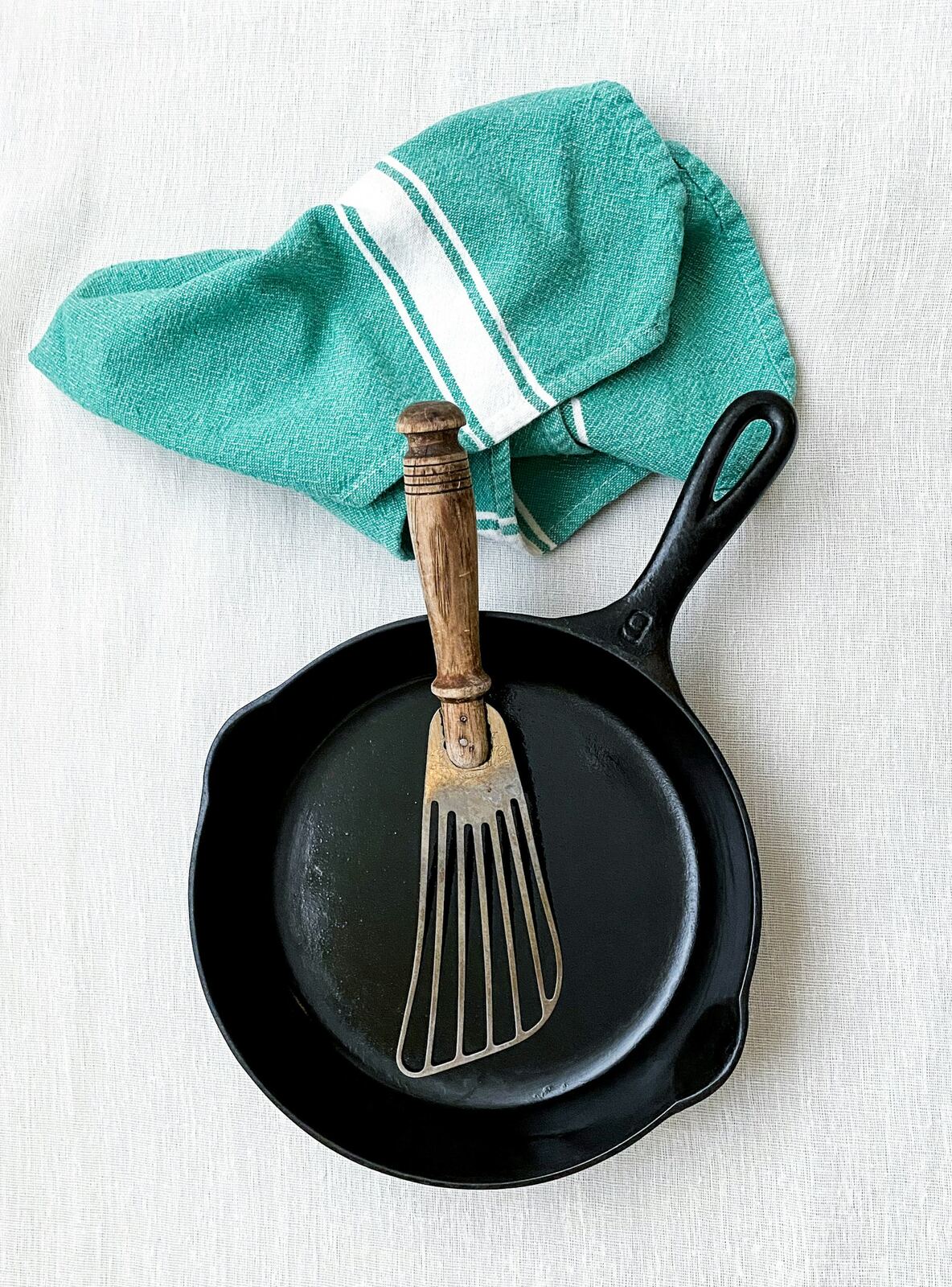
    Washing a cast iron pan
  2. Step 2

    Rub a thin layer of oil over the whole pan

    Inside, outside and the handle. Use grapeseed or flaxseed. Skip olive oil here; it burns at a lower temperature and turns gummy.
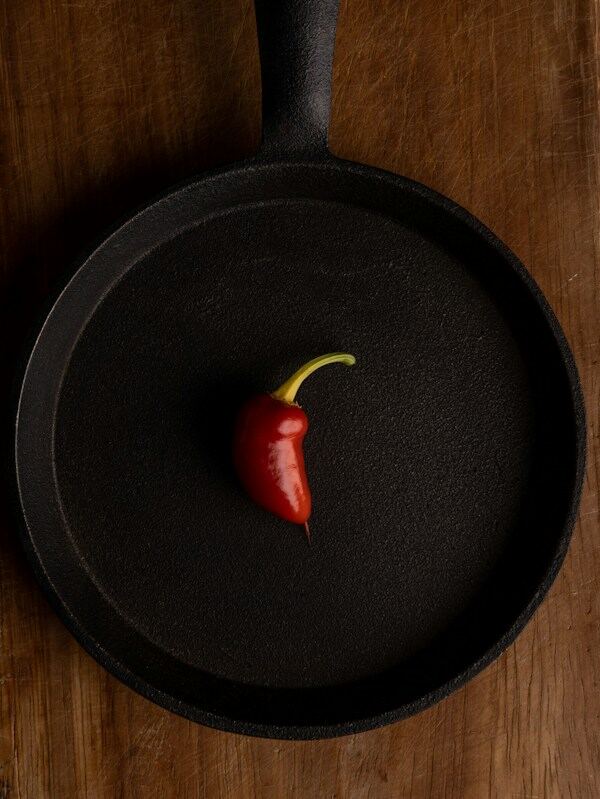
    Rubbing oil over a cast iron pan
  3. Step 3

    Wipe off the excess

    The step most people skip, and the one that matters most. The pan should look almost dry; too much oil is what makes it sticky.
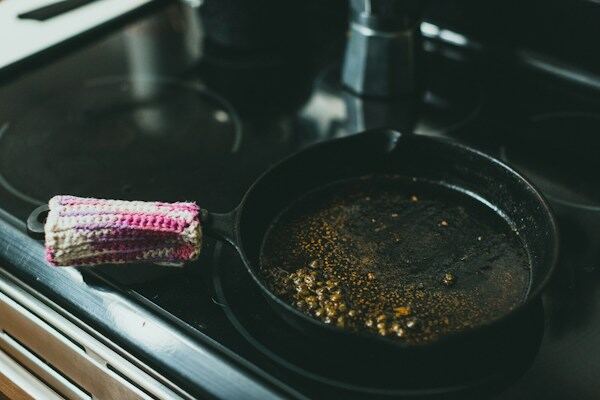
    Wiping excess oil off a pan
  4. Step 4

    Bake it upside down for an hour

    220°C, pan upside down, with a tray underneath to catch drips. Upside down keeps oil from pooling in the base.
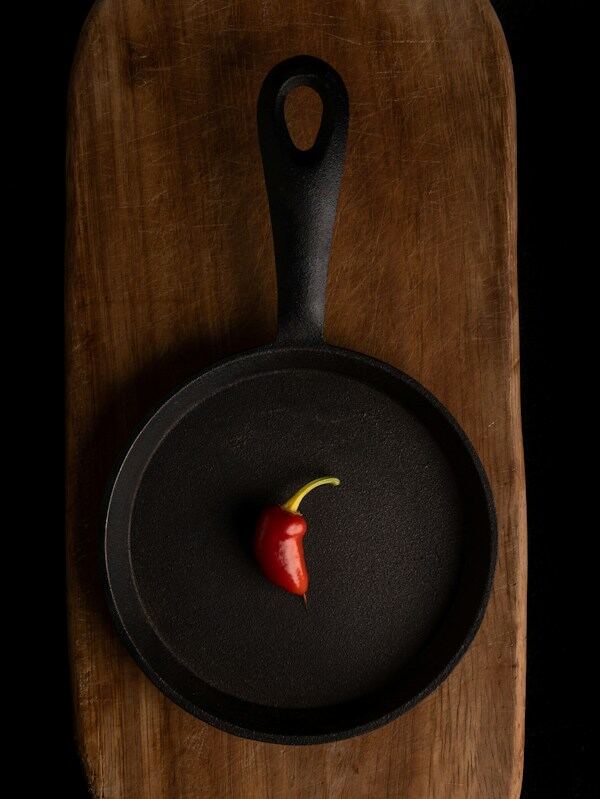
    A pan baking upside down in an oven
  5. Step 5

    Let it cool in the oven

    Turn the oven off and leave the pan inside until it's cool enough to handle. It should come out with a faint sheen and an even, darker colour.
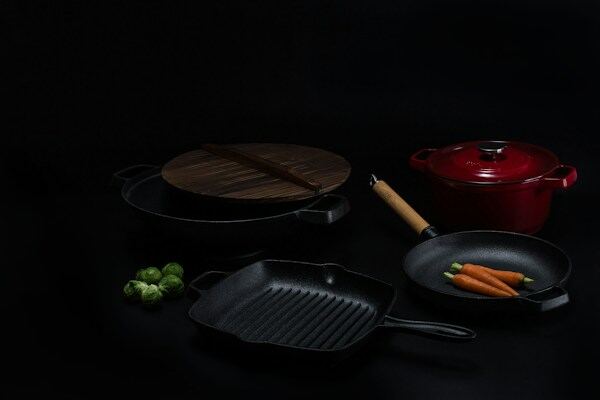
    A finished, seasoned cast iron pan

Common mistakes

  • Too much oil

    A thick coat doesn't season faster. It just goes sticky. Wipe until it looks almost bare.

  • The wrong oil

    Olive oil and butter burn at low temperatures and leave a gummy residue instead of a hard finish.

  • Expecting it done in one round

    Seasoning builds over several rounds and regular cooking. The first bake is a start.
More from the journal

All stories →
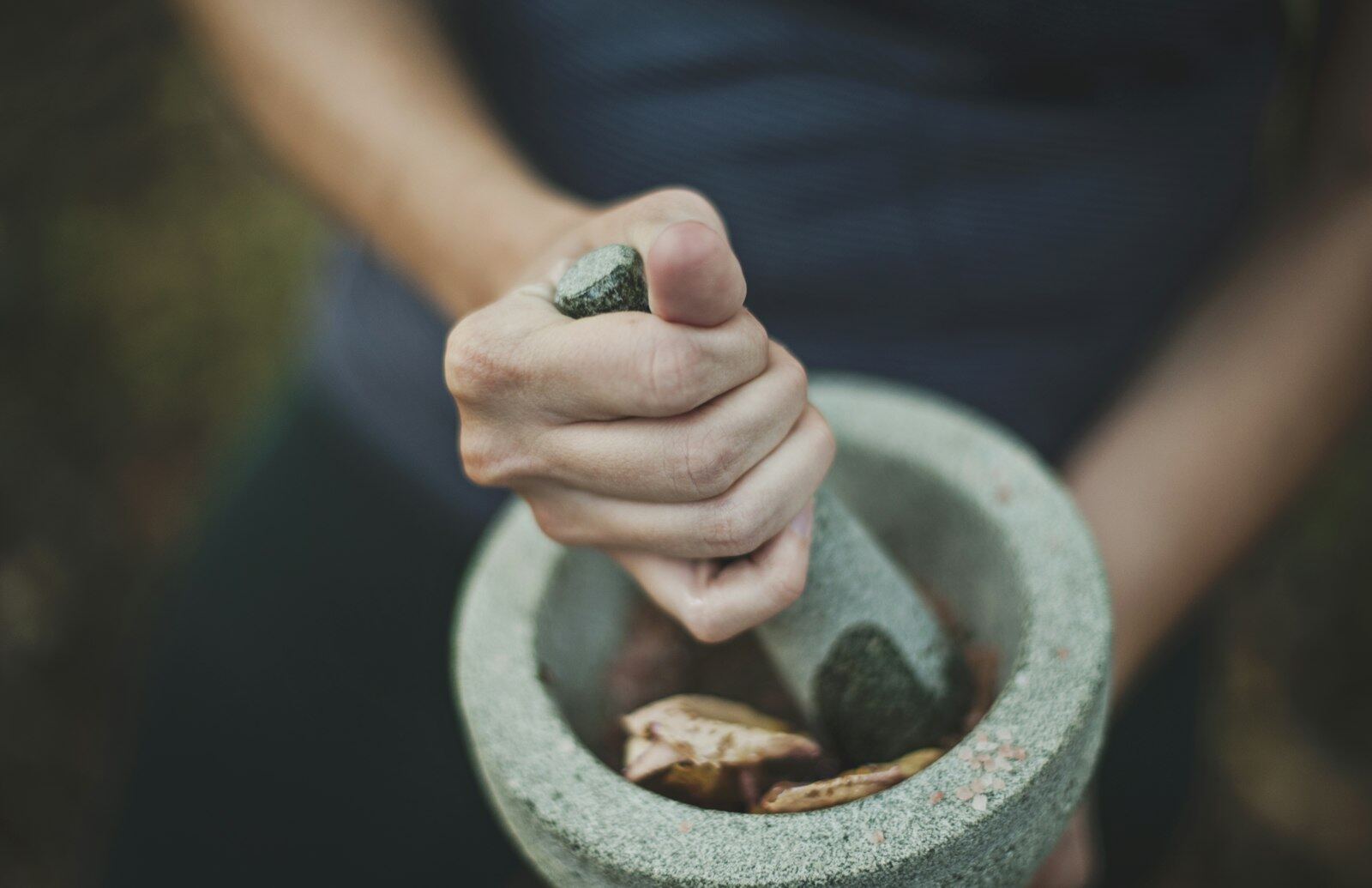
A hand grinding with a pestle in a heavy grey stone mortar

Using a Mortar and Pestle

Crushing rather than chopping: what a mortar and pestle does well, and how to choose and look after one.

A stack of folded linen cloths in soft cream, peach and grey on a wooden table

Looking After Linen

Washing, drying and storing linen, a fabric that gets softer the more it’s used.

A potter’s hands shaping a clay pot on a wheel

From Clay to Kiln: How a Stoneware Cup Is Made

Wedging, throwing, trimming and two firings: the slow making of a cup.

The Nature Happy email

New stories, recipes and what’s back in stock, by email.

By signing up you agree to receive our emails. Unsubscribe any time.  Privacy policy

Thanks. Check your inbox for an email to confirm your sign-up.