Wedging, throwing, trimming and two firings: the slow making of a cup.
Firings
Two
Top temperature
About 1,200–1,300°C
Shrinks
Around 10–15%
Takes
A week or more
A thrown stoneware cup can take a week or more from lump of clay to finished piece, most of it spent waiting: for the clay to dry, and for the kiln to heat and cool.
The steps
Wedging. The clay is kneaded to push out air bubbles and even out the moisture. Trapped air can make a piece crack or burst in the kiln.
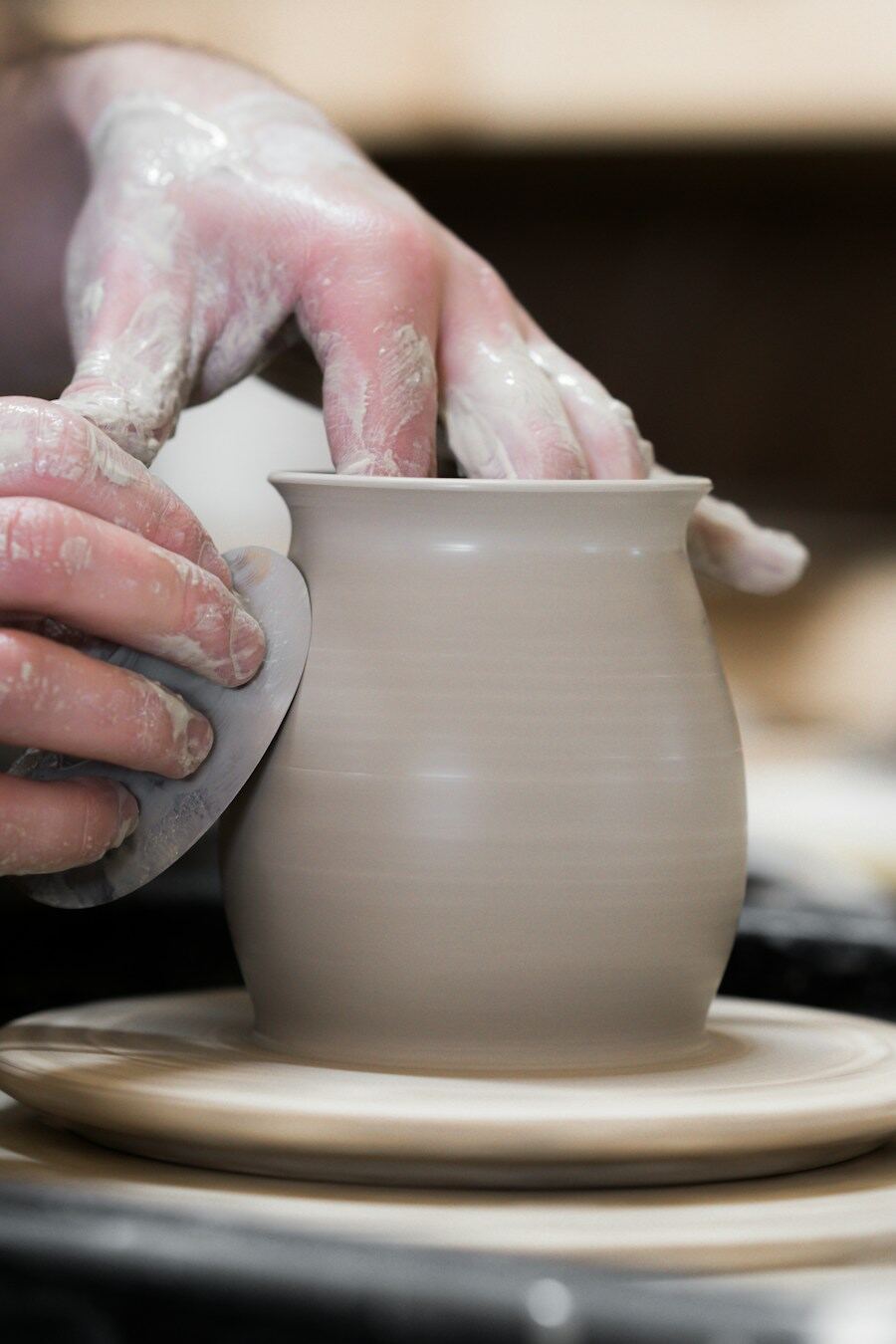
Throwing. On the wheel, the clay is centred, opened with the thumbs, then its walls are pulled up and shaped.
Drying to leather-hard. The cup is left until it’s firm but still slightly damp, like leather.
Trimming. Turned upside down on the wheel, excess clay is shaved from the base to form a foot. A handle, if it has one, is attached now.
The first firing. Once completely dry, the cup is bisque-fired, often to around 900–1,000°C. It comes out hard but still porous, ready to take glaze.
Glazing and the second firing. It’s dipped or brushed with glaze and fired again, for stoneware usually to around 1,200–1,300°C. At that heat the clay becomes dense and watertight, and the glaze melts into a glassy surface.
Clay shrinks as it dries and fires, often by 10–15%, so potters make pieces larger than the finished size. Small differences in each piece — a thumbprint, a slightly different glaze pool — are part of the process.