Crushing rather than chopping: what a mortar and pestle does well, and how to choose and look after one.
Good for
Spices, garlic, pastes
Material
Granite for most jobs
Size
Bigger than you think
Clean
Water and a brush
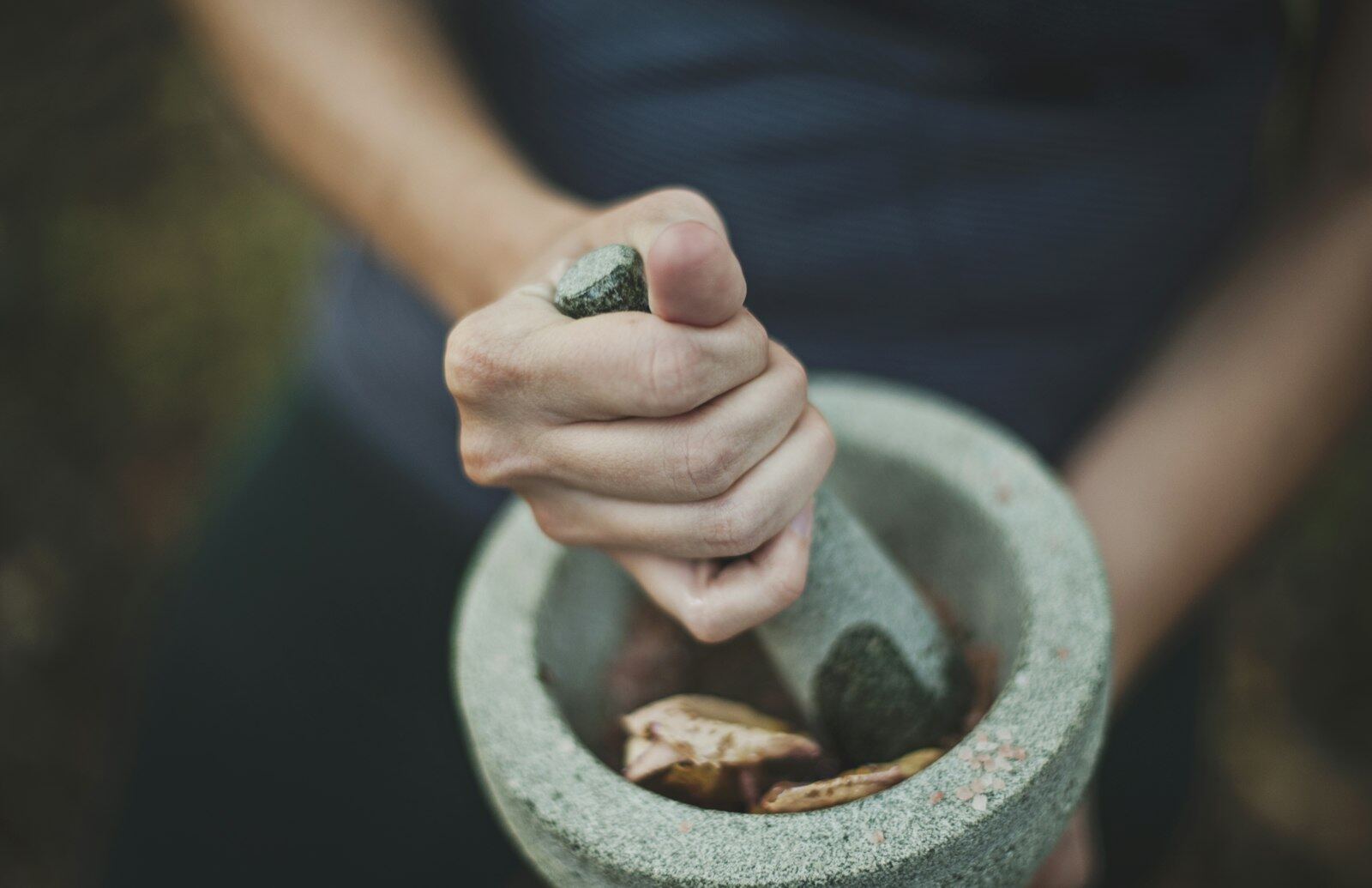
A knife or a blender cuts. A pestle crushes and grinds, which breaks food open and releases its oils and juices. That’s why a paste made in a mortar can taste quite different from the same ingredients blitzed in a machine, and why freshly ground spices smell so much stronger than ready-ground ones.
Choosing one
GraniteHeavy and slightly rough, so things don’t slide around. Good for pastes, garlic and whole spices.
MarbleSmoother. Fine for soft herbs and powders, less grip for hard seeds.
WoodLight and quiet, but it absorbs smells and oils. Best kept for dry spices.
SizeA small mortar sends seeds flying. One that holds at least a cup is easier to use.
How to use it
Work in small amounts.
Start with the hardest or driest things, such as salt, peppercorns or toasted seeds. Salt also helps grind softer things like garlic and herbs.
Pound with short, straight strokes to break things up, then grind in circles against the side to make a paste.
Add oil or liquid last, a little at a time.
A new stone mortar
Many people grind a handful of raw rice in a new granite mortar, repeating until the rice stays white, to remove any loose grit. Rinse and dry it afterwards.
To clean it, rinse with hot water and scrub with a brush. Stone is slightly porous, so it’s best to skip soap, which can leave a taste. Let it dry fully before putting it away.