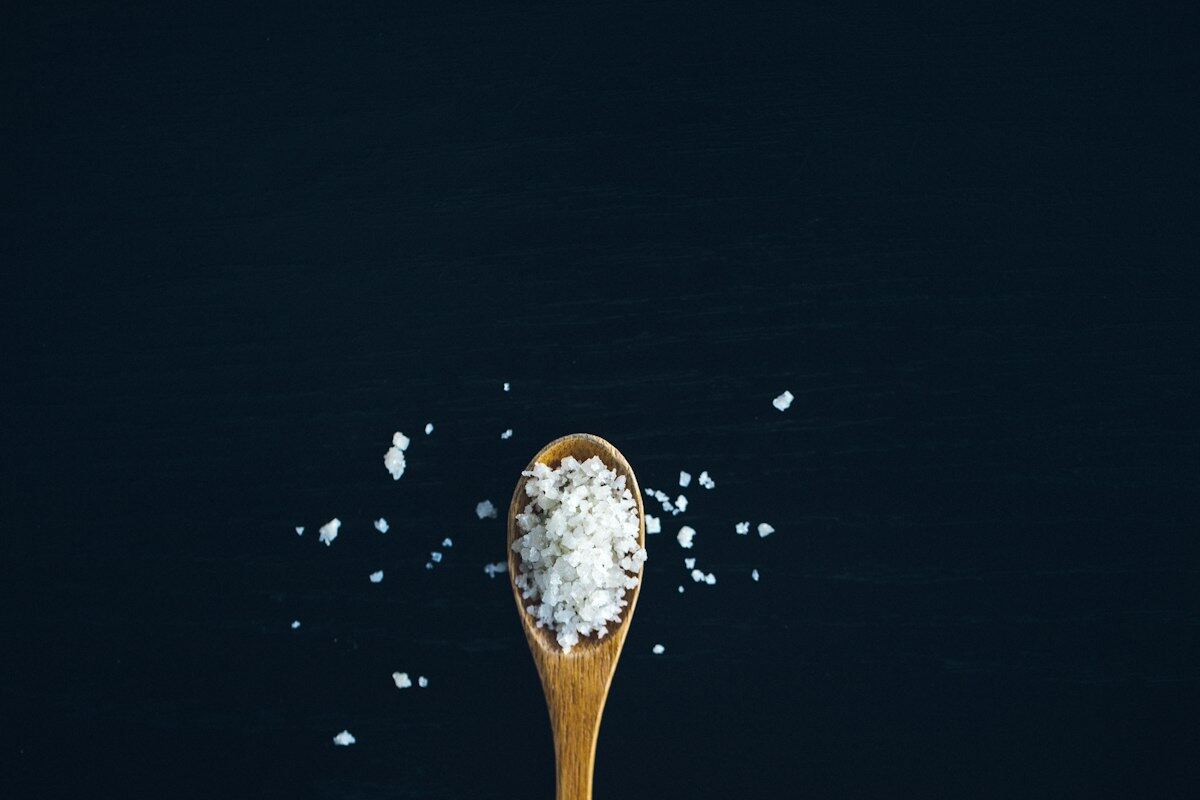
Hollow pyramids, grown on the surface of warm brine.
Made from
Seawater
Crystal
A hollow pyramid
Best for
Finishing
Store
Dry and airtight
All salt is mostly sodium chloride. What makes flaky salt different is the shape of its crystals, and that comes from how slowly and where they form.
Growing a flake
Sea salt is made by evaporating seawater. When the brine is warmed gently, crystals begin to form on its surface. Surface tension holds each tiny crystal up, and new salt keeps building around its edges, so it grows outwards and down into a hollow, upside-down pyramid. Eventually it gets too heavy, sinks, and is skimmed or raked out, often by hand.
Fast evaporation, or salt formed throughout the liquid rather than on top of it, gives smaller, denser grains instead.
Why cooks like it
TextureThe thin flakes crunch, then dissolve quickly, so they’re best added at the end: on salads, roast vegetables, eggs, chocolate desserts.
Easy to pinchYou can feel how much you’re using, which makes seasoning by hand easier.
Less salt per spoonFlakes take up more space than fine grains, so a teaspoon of flaky salt holds less salt by weight than a teaspoon of table salt. Season to taste rather than swapping spoon for spoon.
Keeping it
Store flaky salt somewhere dry in a sealed container. Moisture makes the flakes clump and lose their crunch.