Vinegar, salt, coriander and moving air: how South Africa’s dried meat is made, and how it differs from jerky.
Usually
Beef or venison
Cured with
Vinegar, salt, spices
Dried
In air, for days
Not
Cooked or smoked
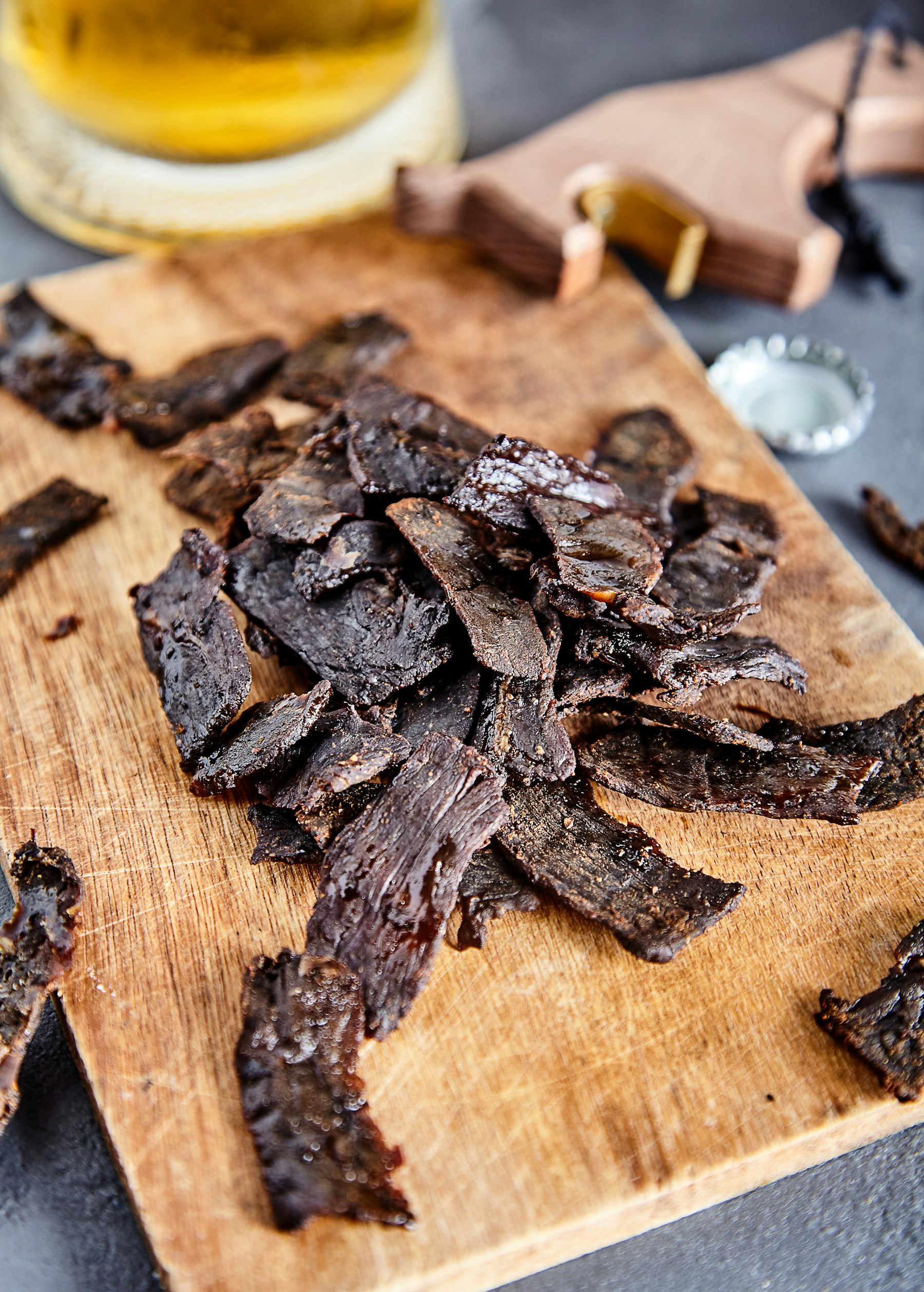
Biltong is meat that’s cured with vinegar, salt and spices, then dried in the air. Drying meat to keep it is an old practice in southern Africa, and the way biltong is made today grew out of the methods used by the region’s early settlers, who needed food that would keep on long journeys. The name comes from Dutch: bil, the rump, and tong, a strip.
How it’s made
Lean beef or venison is cut into thick strips along the grain. Cuts such as silverside and topside are common.
The strips are dipped or sprayed with vinegar, then rubbed with coarse salt, toasted and roughly crushed coriander seed and black pepper. Some recipes add a little brown sugar.
The meat rests for a few hours or overnight, so the vinegar and salt can work.
It’s hung in a cool place with plenty of moving air to dry. Depending on the thickness, the weather and how dry you like it, that takes from a few days to a week or more.
Biltong and jerky
They’re often compared, but they’re made differently. Jerky is usually sliced thin, marinated and dried with heat. Biltong is cut thick, cured with vinegar and salt, and dried without cooking or smoking, then sliced. Some people like it “wet”, still dark red in the middle; others like it dry all the way through.
DroëworsDried sausage, flavoured with the same coriander, made thin so it dries quickly.
Keeping itStore biltong in a paper bag, not plastic, which traps moisture. Wetter biltong keeps for less time; the fridge helps.