The “fine bush” of the Cape: proteas, ericas and restios, and why it needs fire.
Name
Afrikaans, “fine bush”
Where
Western and Eastern Cape
Main groups
Proteas, ericas, restios
Renewed by
Fire
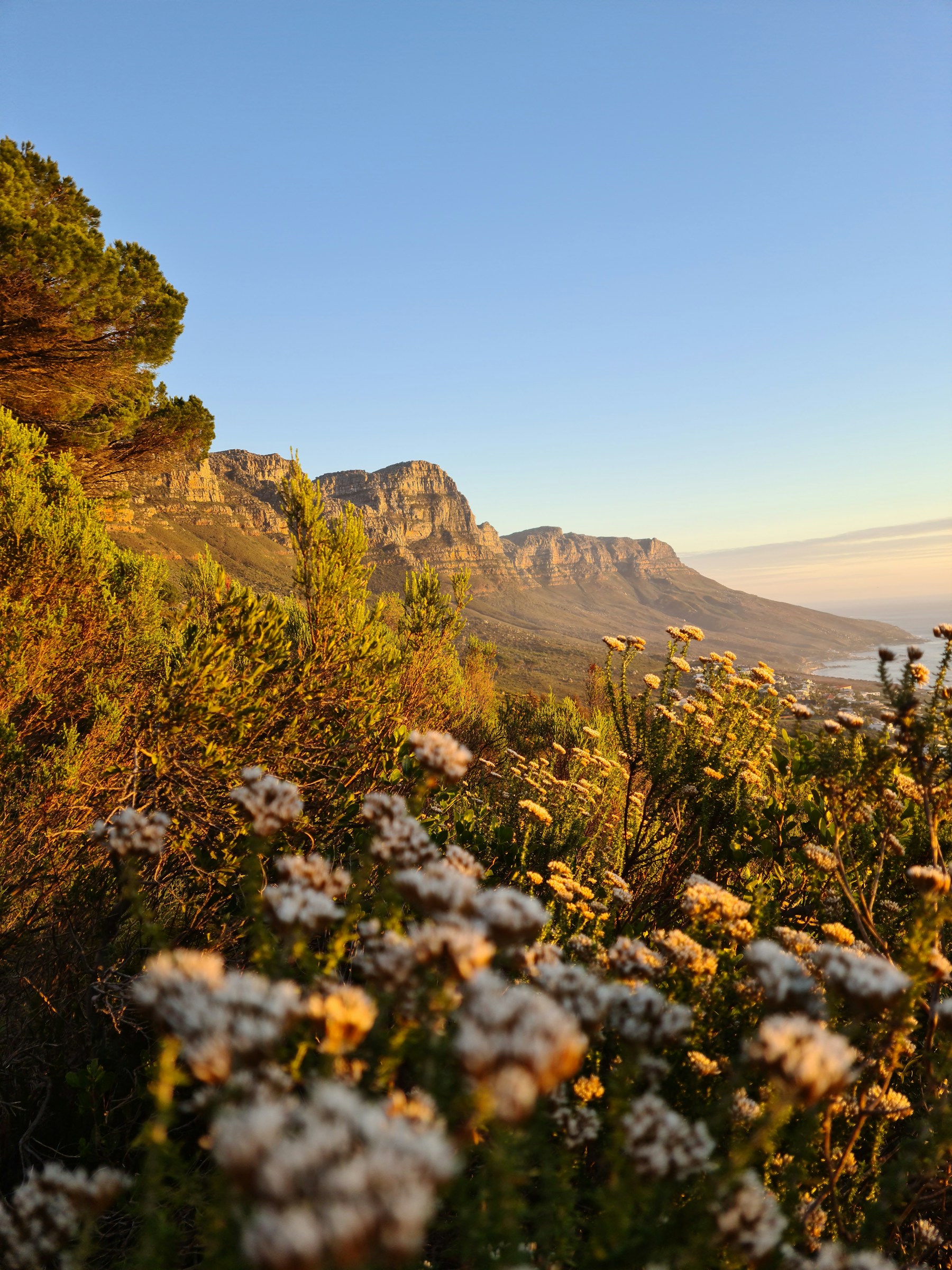
Fynbos is the low, shrubby vegetation of South Africa’s south-western and southern Cape. The name is Afrikaans for “fine bush”, after the small, narrow leaves of many of its plants. It grows where winters are wet, summers are dry and windy, and the soils are poor.
It’s the main vegetation of the Cape Floral Region, the smallest of the world’s six floral kingdoms and one of the richest. The region has around 9,000 plant species, most of which grow nowhere else, and parts of it are a UNESCO World Heritage Site.
Three groups to look for
ProteasShrubs with large, often showy flower heads, including the king protea, South Africa’s national flower, as well as pincushions and conebushes.
EricasHeaths, with tiny leaves and small, often tubular flowers. There are hundreds of species in the Cape.
RestiosReed-like plants without obvious leaves. Some are still used for thatching.
Between them grow bulbs such as irises and lilies, and plants many people know from the kitchen: rooibos, honeybush and buchu all grow wild in fynbos.
Fire
Fynbos needs fire. Every ten to twenty years or so, depending on the area, fire clears old growth and triggers new life. Some plants resprout from roots below the ground, some release seed from cones that open after a fire, and some seeds only germinate in response to smoke. Too frequent a fire, or none at all, both harm it.
Seeing it
Fynbos flowers at different times through the year, with many areas at their most colourful in late winter and spring. Botanical gardens and nature reserves in the Western Cape are good places to start.